01 / FLAME
Saturn V
Height111 m
Thrust34 MN
Payload118 t
Engines5 F-1
Flights13
A rocket only leaves the ground once its engines push down harder than gravity pulls it back. Every second on the pad, tons of propellant burn away just to build that thrust.
As the vehicle accelerates through the thickest part of the atmosphere, aerodynamic stress on the airframe peaks at a point engineers call Max Q. Engines briefly throttle down to protect the structure before pushing back to full power.
Hauling an empty fuel tank into orbit wastes energy, so the spent first stage is jettisoned and falls away. Staging is the main reason a rocket can reach the speeds needed to leave Earth at all.
The nose fairing shields the payload from air friction on the way up. Once the rocket is high enough that drag is no longer a threat, it splits open and falls away to save weight.
Reaching space is the easy part. Staying there means moving sideways fast enough — about 7.8 kilometers per second — that the curve of your fall matches the curve of the Earth beneath you.
Mission complete. Every motion in this scene, the flame, the staging, the view of Earth, is driven directly by scroll position, not time — stop scrolling, and the flight freezes exactly where it is.
The animation above tells the story of one flight. Here are a few facts about rockets in general — fuel, physics, records, and reuse.
Rocket engines burn one of three propellant families. Solid motors are simple and reliable but can't be throttled or shut off once lit. Liquid engines pump fuel and oxidizer separately, giving precise control over thrust — which is why almost every orbital rocket relies on them.
Tsiolkovsky's rocket equation shows that the fuel needed to reach a given speed grows exponentially with the mass you're carrying. Dropping an empty stage instead of hauling it all the way to orbit is the simplest way to cheat that equation.
Still the tallest rocket ever to fly successfully, Saturn V stood over 110 meters tall and produced roughly 34 meganewtons of thrust from its five F-1 engines. It launched every crewed Apollo mission to the Moon between 1967 and 1973.
For decades, first stages were thrown away after a single flight. Reusable boosters that land themselves and fly again, refurbished in weeks rather than rebuilt from scratch, have cut the cost of reaching orbit dramatically over the last ten years.
SpaceX's Starship, with its Super Heavy booster and more than 30 Raptor engines, generates more total thrust at liftoff than any rocket in history, surpassing even Saturn V.
The next generation of heavy rockets is built to go further: back to the Moon under NASA's Artemis program, and eventually toward Mars. The physics on this page — thrust, staging, orbital velocity — applies just as much to those missions as to this one.
To permanently escape Earth's gravity, a rocket needs to reach about 11.2 km/s. It is not a speed to maintain — it is the energy needed to stop falling back to Earth.
The International Space Station orbits about 400 km above Earth and completes nearly 16 trips around the planet each day. It has hosted microgravity research since 2000.
With SpaceX, Rocket Lab, and other private operators, access to space is becoming more frequent and reusable. Returning boosters turn a one-off mission into a genuine space fleet.
From historic power to modern reuse, each launcher tells a different story about pushing the frontier.
Hover (or tap) an image to see its info.
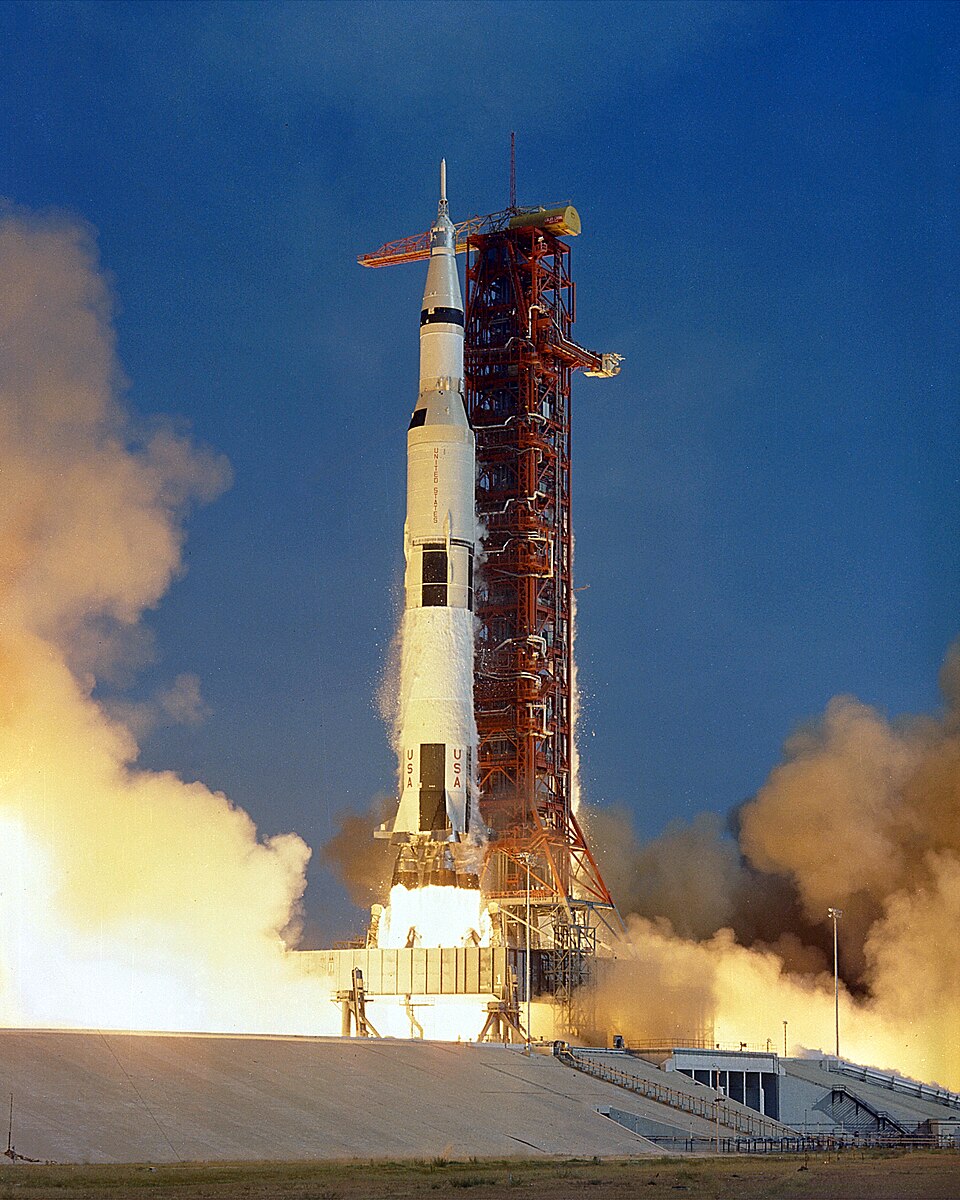 Saturn V
NASA — Apollo program · 111 m tall · First flight: 1967 · Still the most powerful rocket ever successfully flown.
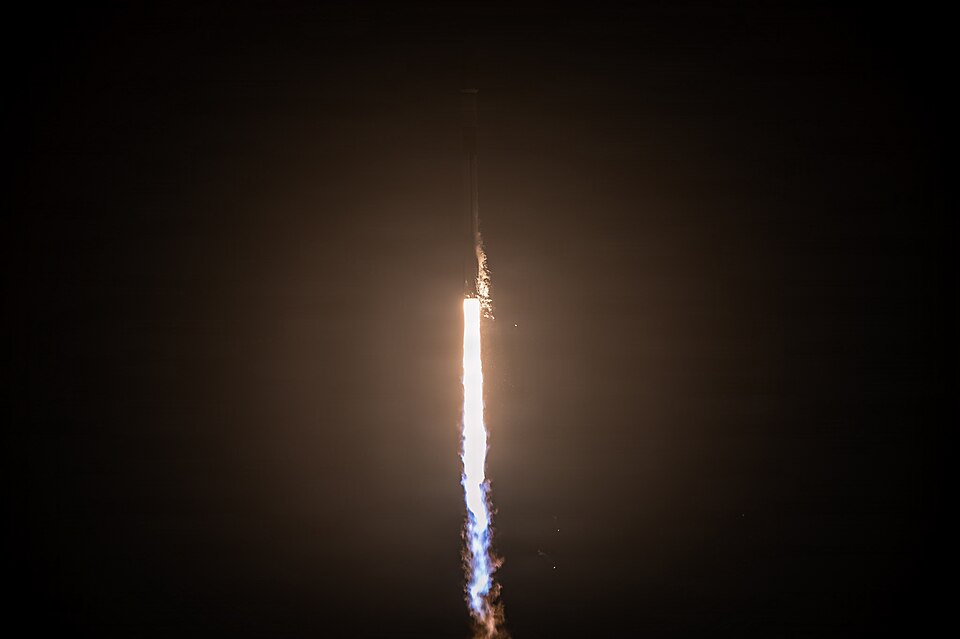 Falcon 9
SpaceX (USA) · 70 m tall · First flight: 2010 · First orbital-class rocket with a reusable, landing first stage.
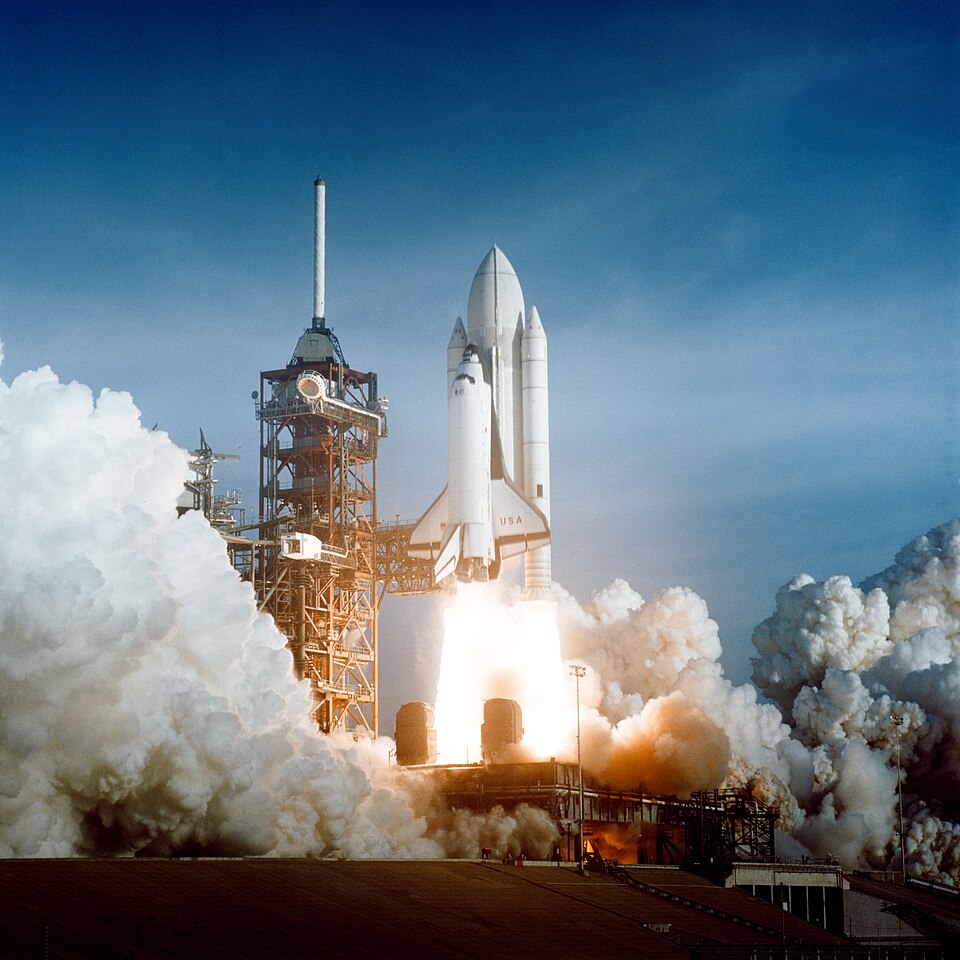 Space Shuttle
NASA · about 56 m on the pad · First flight: 1981 · 135 missions, first partially reusable orbital spacecraft.
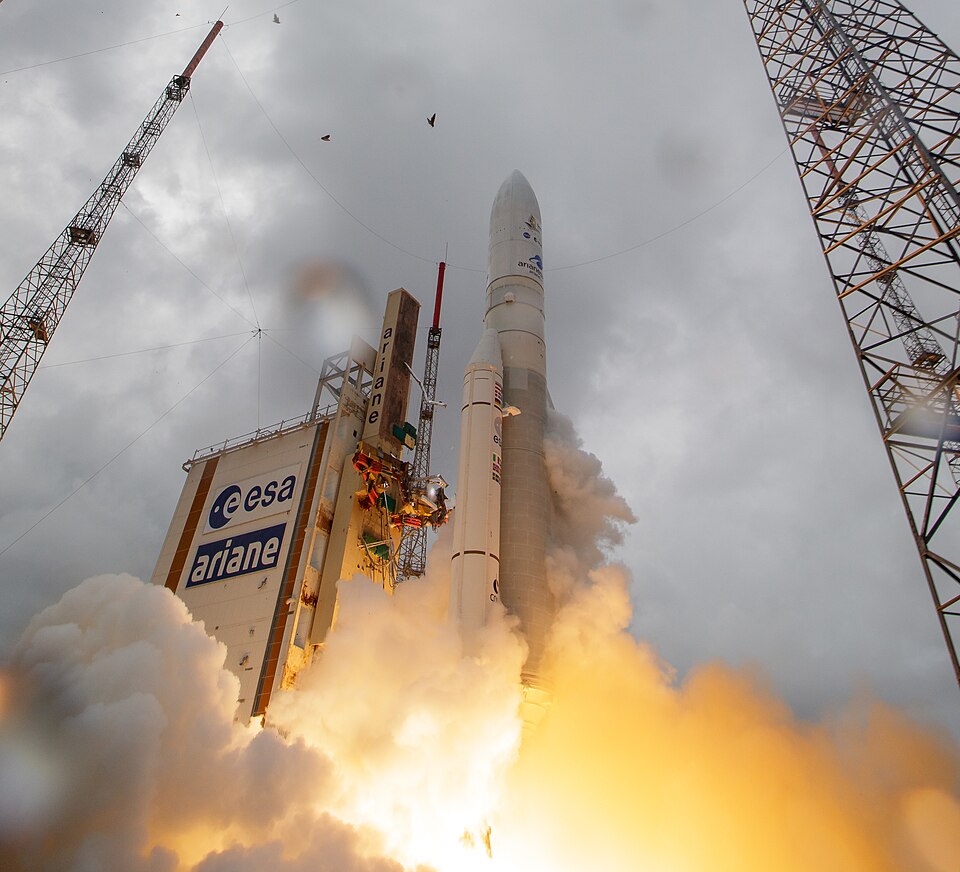 Ariane 5
ESA / Arianespace (Europe) · 53 m tall · First flight: 1996 · Launched the James Webb Space Telescope in 2021.
 Starship
SpaceX (USA) · 121 m with its Super Heavy booster · First full flight: 2023 · The tallest, most powerful rocket ever built.
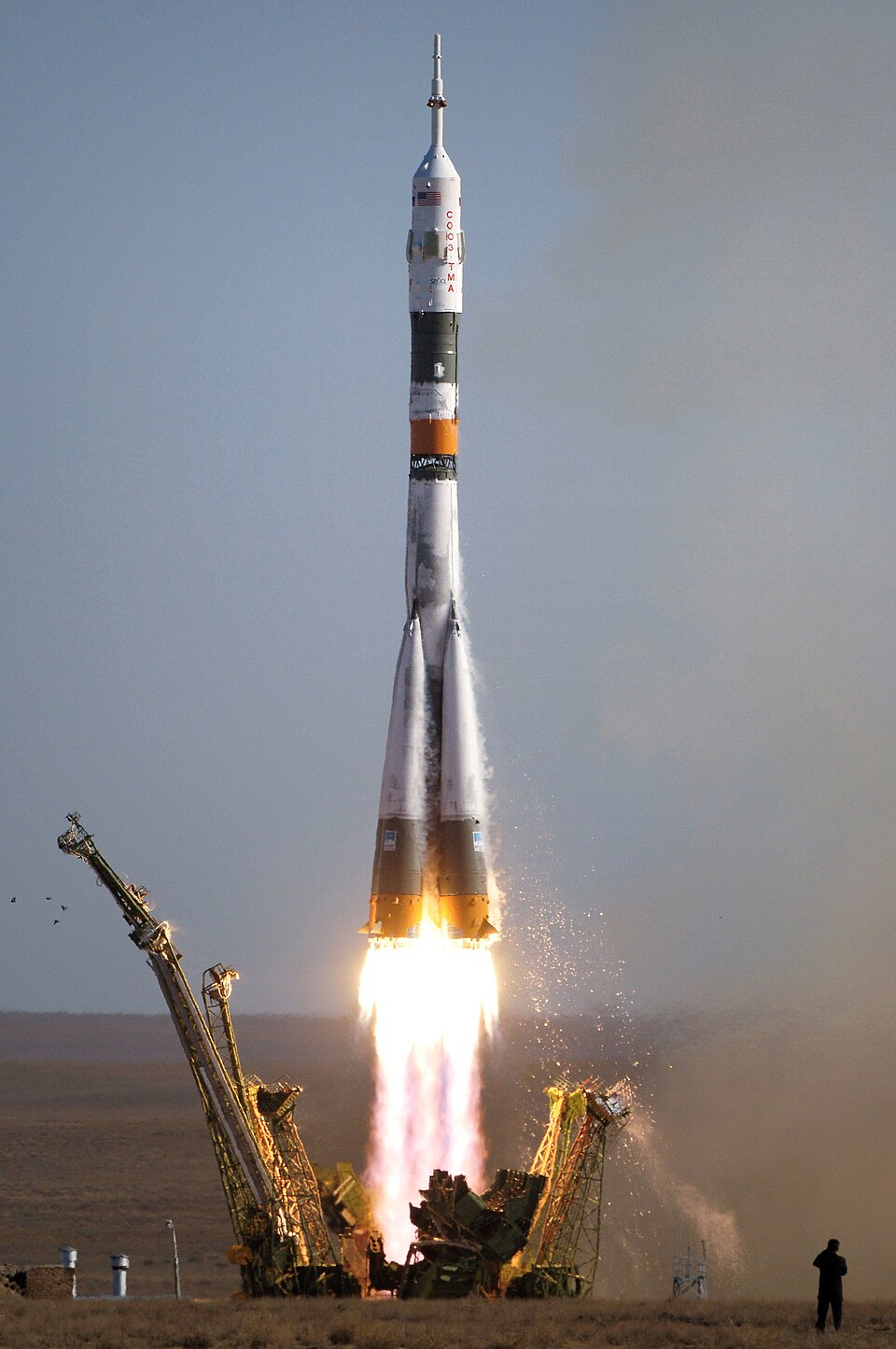 Soyuz
Soyuz
Roscosmos (Russia) · about 46–50 m tall · Flying since 1966 · The most-launched rocket family in history.
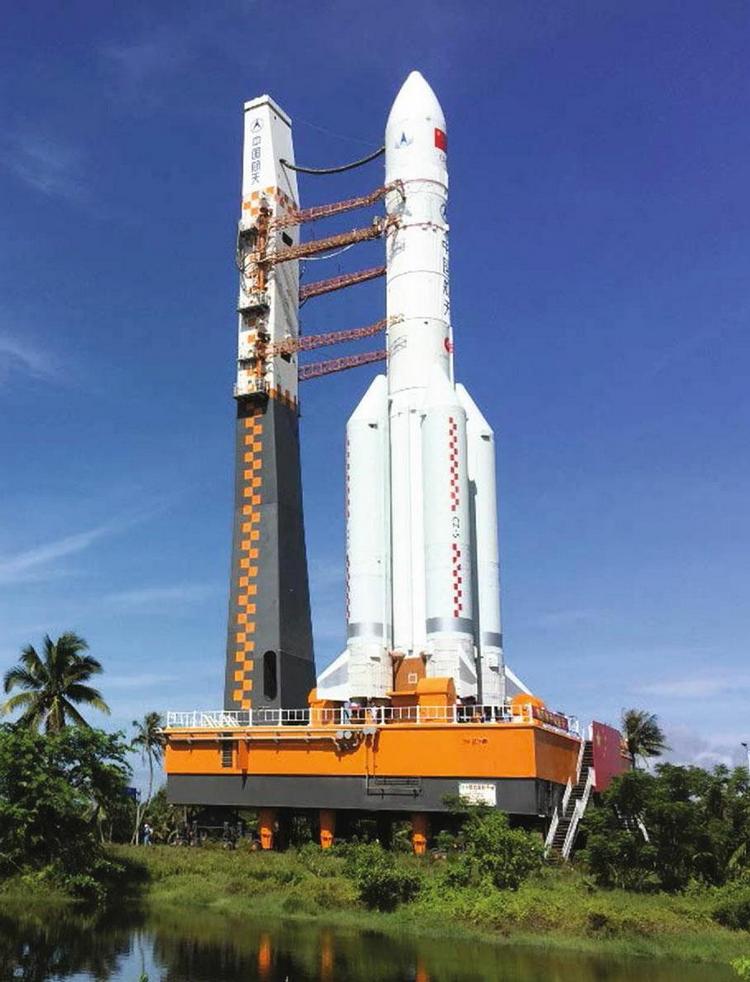 Long March 5
CNSA (China) · 57 m tall · First flight: 2016 · China's heaviest-lift rocket, launched the Chang'e-5 Moon sample return.
 New Glenn
Blue Origin (USA) · 98 m tall · First flight: 2025 · Reusable heavy-lift rocket named after astronaut John Glenn.
 Vulcan Centaur
ULA (USA) · about 61.6 m tall · First flight: 2024 · Methane-fueled successor to the Atlas V and Delta IV.
Photos: NASA, ESA/Arianespace, U.S. Space Force, SpaceX, Blue Origin, CNSA, ULA — via Wikimedia Commons.